
The Battle for the Backyard: Deciding on a Cedar vs Treated Pine Fence in Texas
If you are planning to build a new wood privacy fence anywhere in the Lone Star State, you are about to make a decision that you will have to live with for the next twenty years. A fence in Texas is not just a polite boundary marker to keep your neighbor’s dog out of your flower beds. Rather, it is a structural shield that must withstand brutal summer heat waves, torrential spring thunderstorms, violent spring winds, and sudden winter freezes.
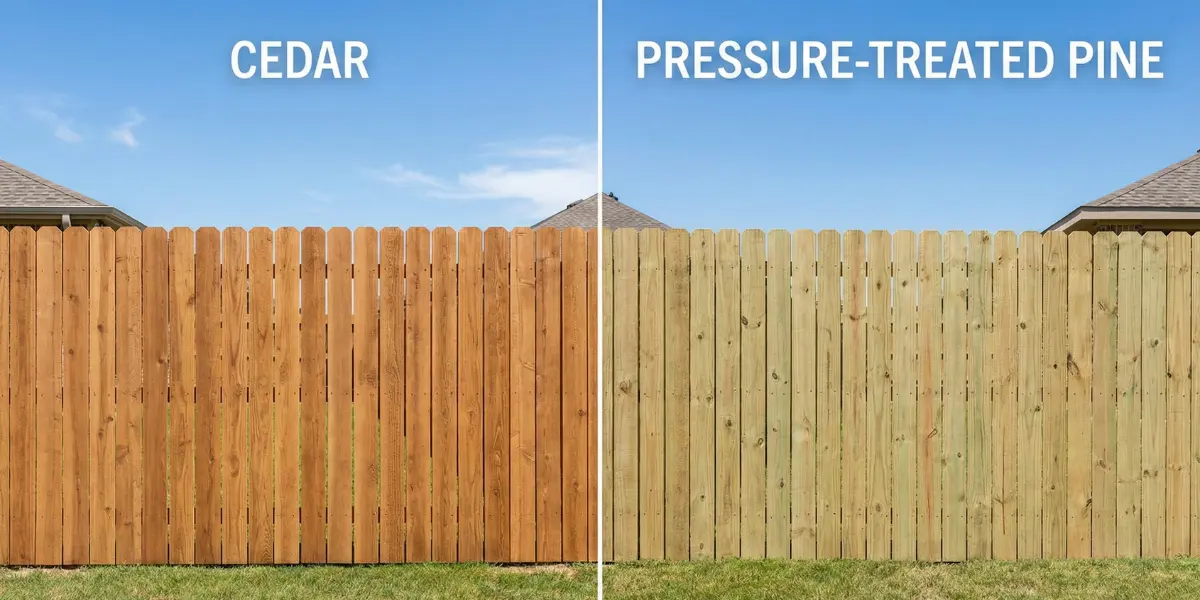
When you start talking to a professional fence contractor, the conversation will almost immediately boil down to a classic material showdown. Specifically, you will have to choose between a premium cedar vs treated pine fence to protect your property line.
Many property owners look at the initial price tags and assume that wood is just wood. However, making the wrong choice can lead to a warped, sagging mess within less than five years.
Understanding the unique physical characteristics of these two lumber species, analyzing how they interact with our specific soil conditions, and factoring in long-term maintenance requirements will ensure you build a boundary that stands truly Texas tough.
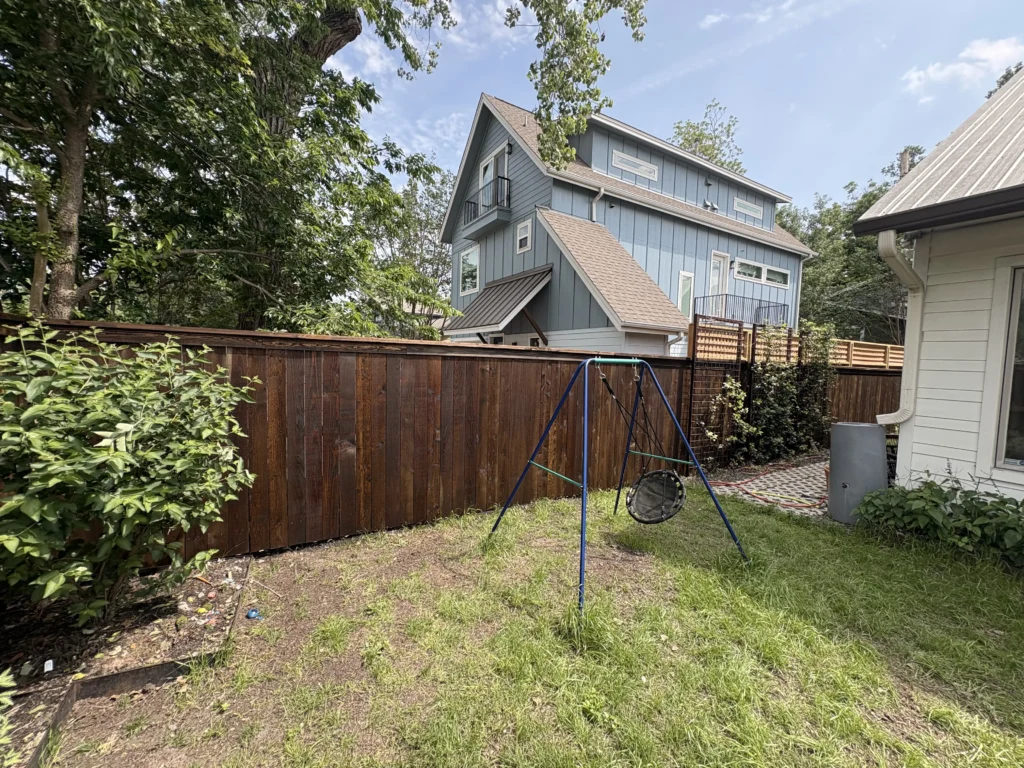
Understanding the Contenders: Natural Resistance vs. Chemical Treatment
To make an informed decision for your outdoor space, you must first look at what makes these two popular building materials fundamentally different. The variation comes down to how each wood species protects itself against rot, moisture, and destructive insects.
Western Red Cedar is an exceptional, naturally durable softwood that thrives in exterior applications without requiring synthetic additives. The secret to its longevity lies within its natural chemistry. Cedar trees produce organic compounds known as extractives and tannins. These internal elements act as a natural defense system, making the wood highly toxic to wood-boring bugs, termites, and fungal spores. Furthermore, cedar features a remarkably stable cell structure, meaning it contains very little natural moisture once dried.
In contrast, southern yellow pine possesses very little natural resistance to the elements. Left untreated in the Texas dirt, it would rot away within a matter of months. To prevent this rapid decay, the raw lumber undergoes an industrial pressure-treatment process. The wood is placed into a giant pressurized cylinder where water-borne chemical preservatives are forced deep into the cellular structure of the lumber.
Modern pressure treatment usually utilizes micronized copper azole to shield the organic fibers from fungal decay and insect attacks. Consequently, you receive a highly durable building component, but it behaves very differently from natural wood when exposed to the elements.
Structural Performance: The Reality of Texas Weather
Our regional climate puts incredible physical stress on exterior wood structures. When choosing between a cedar vs treated pine fence, you must consider how each material reacts to rapid cycles of intense moisture followed by baking sunlight.
Because pressure-treated pine is saturated with liquid chemicals during manufacturing, it arrives at your job site incredibly wet and heavy. As the hot sun beats down on the newly installed pickets, that internal moisture evaporates rapidly and unevenly. This rapid drying process causes the wood fibers to warp, twist, bow, and cup. If the installer does not utilize heavy-duty fasteners and thick rails, a treated pine fence line can quickly develop unsightly gaps and crooked lines.
Cedar handles the intense sun with far greater elegance. Thanks to its low density and uniform cell structure, it shrinks and swells minimally during weather transitions. Therefore, your fence line remains straight, plumb, and true for years after the initial installation.
Property Value Analysis: Comparing Performance Over Time
Choosing the right materials requires balancing your immediate construction budget against the long-term asset value of your property. Different lumber choices yield completely distinct lifespans and maintenance timelines.
Review this structural performance matrix to understand how these two materials compare across critical ownership milestones:
| Material Attribute | Premium Western Red Cedar | Pressure-Treated Southern Pine |
| Average Lifespan | Fifteen to twenty-five years with proper care | Ten to fifteen years before major failure |
| Dimensional Stability | High resistance to warping, twisting, and bowing | Prone to significant shrinking and cupping |
| Insect Defense | Natural internal oils repel termites and bugs | Infused chemical preservatives deter pests |
| Aesthetic Aging | Weathers evenly to a gorgeous silver-gray | Can develop a greenish hue or dark gray streaks |
The Strategic Hybrid: Maximizing Durability and Cost Efficiency
Many discerning property owners choose a brilliant compromise that captures the absolute best attributes of both materials. This strategy is known as building a hybrid system.
While pressure-treated pine can warp when sliced thin into privacy pickets, it is incredibly strong and durable when used as a thick, structural support post. Because treated pine posts are rated for direct ground contact, they resist soil moisture and subterranean rot exceptionally well.
Therefore, a premier installation method involves setting heavy-duty, pressure-treated pine posts deep into concrete footings to establish an unbreakable structural foundation. Alternatively, some homeowners choose commercial-grade galvanized steel posts for the ultimate wind resistance.
Once the structural posts are set, the installer utilizes premium western red cedar for the horizontal stringers and vertical privacy pickets. This hybrid design ensures that your structural framework resists ground-level decay perfectly, while your visible privacy screen remains completely flat, stable, and visually stunning.
For property owners who want a deeper look into standard grading rules and performance standards for treated lumber, the American Wood Protection Association (AWPA) provides comprehensive guidance detailing retention levels for different climate zones.
Long-Term Maintenance and Aesthetic Preservation
No matter which option you select for your property boundary, regular maintenance will extend its useful life significantly. Both options will eventually turn gray when exposed to UV radiation from the sun.
If you prefer the rich, warm red tones of natural wood, you should apply a premium exterior stain. A high-quality, oil-based, semi-transparent stain penetrates deep into the wood fibers, blocking UV rays and shedding water efficiently.
Because cedar is naturally porous, it drinks in stain beautifully, resulting in a deep, rich finish that highlights the natural grain. Treated pine must dry completely for several weeks before it can accept a topical sealer or stain, requiring patience from the property owner.

Build to Last with Morriss Fence Company
Investing in a new privacy barrier is a major step toward transforming your property’s security, privacy, and curb appeal. You should never settle for cheap, mass-market materials that fail long before their time.
At Morriss Fence Company, we understand exactly what it takes to build structures that survive the demanding central Texas landscape. Serving properties throughout Buda, Austin, and the surrounding Central Texas communities, our team is committed to exceptional durability, quality materials, and superior craftsmanship. We do not cut corners, and we do not use sub-par lumber. Whether you decide on a premium cedar vs treated pine fence, or a heavy-duty custom metal solution, we design and install every project to ensure long-term value.
Let our experienced professionals provide a beautiful, robust boundary that gives your family true peace of mind.
Ready to elevate your home with a beautiful privacy fence? Give our local Central Texas office a call today at (512) 641-6288 or visit builttexastough.com to schedule your free, comprehensive project estimate today!